Therapeutic Ultrasound & Electric Stimulation
Two classic physical-therapy treatments from one machine: deep sound waves to warm, relax, and help heal injured soft tissue — and gentle electric stimulation (e-stim) to calm pain and re-activate weak, guarded muscles.
Call (352) 340-3220Plan your visit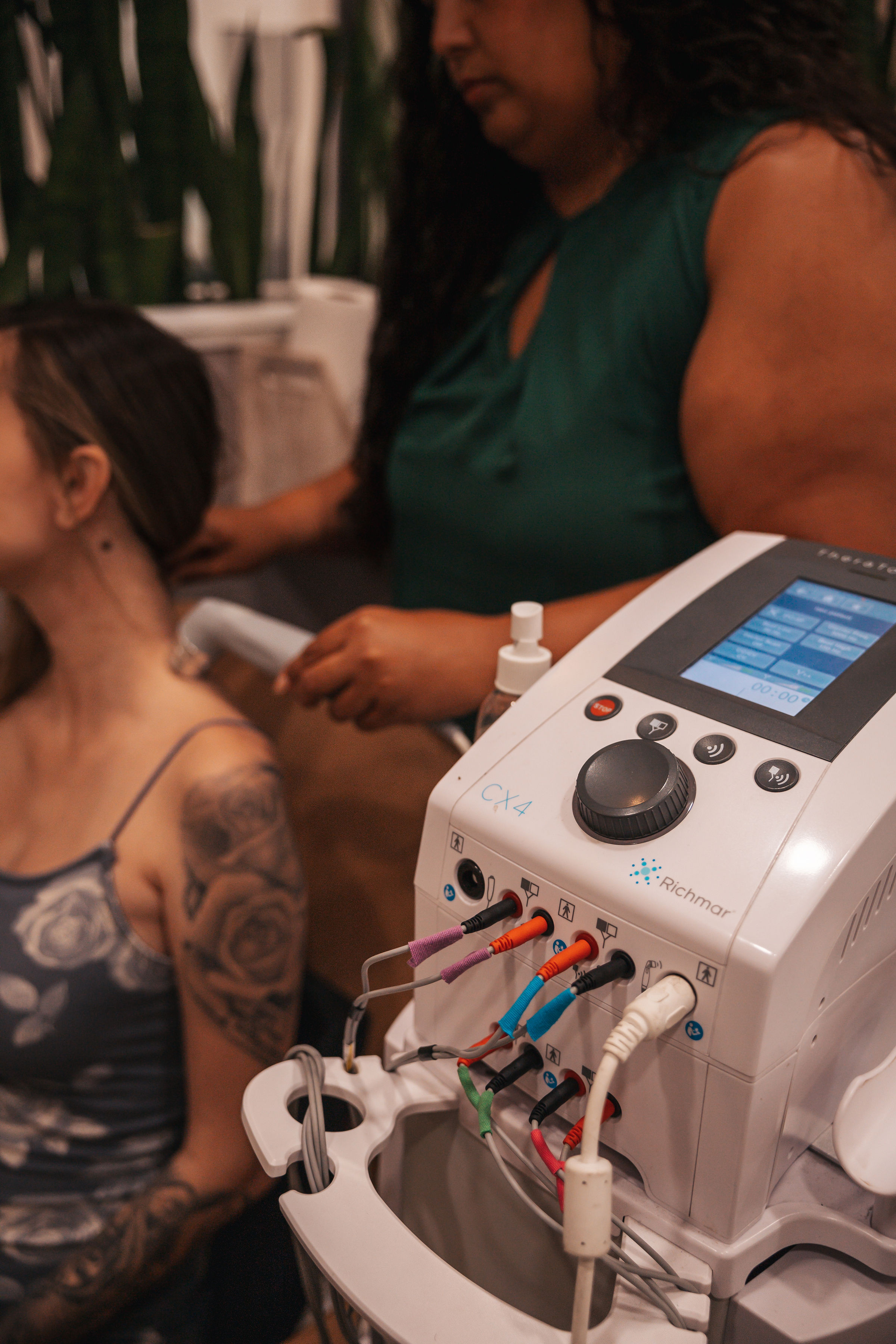
A personal starting point.
Ask about therapeutic ultrasound and electric stimulation as part of an individualized care discussion. Our team can explain both services and assess whether they are appropriate for you.
What is therapeutic ultrasound?
Therapeutic ultrasound is one of the classic physical-therapy modalities, used in clinics for decades to treat injured soft tissue. It is not the same as diagnostic ultrasound imaging: instead of taking pictures, it delivers high-frequency sound waves into muscle, tendon, and ligament tissue to promote healing and relieve pain. It is often used as one part of a chiropractic care plan, preparing tissue before an adjustment or helping an injured area recover.
How it works
A small wand (sound head) is moved in slow circles over the skin with a layer of gel. The sound waves penetrate deep into the tissue and produce two effects. The thermal effect gently warms deeper tissues that hands and hot packs cannot reach, increasing blood flow and making tight tissue more flexible. The non-thermal effects — microscopic vibration and movement within the tissue — support cell repair and help manage inflammation. Treatment takes about 5–10 minutes per area and feels like gentle warmth or nothing at all.
What is electric stimulation (e-stim)?
Electric stimulation — usually called e-stim — comes from the same machine. Our Richmar CX4 is a combination unit: alongside the ultrasound wand, it delivers mild electrical currents through small electrode pads placed on the skin around the painful or injured area, and the two therapies can even be run together, with e-stim delivered through the ultrasound treatment itself. There are two main styles. Sensory-level stimulation (often called TENS-style) produces a tingling or buzzing feeling and works mainly on pain — the signals compete with pain signals on their way to the brain, which can turn the volume down on an achy, guarded area. Motor-level stimulation is set a little stronger so the muscle gently contracts and releases in a rhythm; that pulsing helps re-educate muscles that have gone weak or “switched off” after an injury, works out spasm, and pumps fluid through the tissue.
How e-stim works
Your provider places the pads, chooses the program, and raises the intensity only to a level you find comfortable — a strong but relaxed tingling for pain relief, or visible gentle contractions for muscle work. A session usually runs about 10–15 minutes while you rest, and it is commonly paired with an adjustment or used right before one, because calmer, less guarded muscles are easier to treat. There is no downtime afterward.
Conditions ultrasound and e-stim are commonly used for
- Muscle spasm and tightness
- Tendinitis and tendon irritation
- Bursitis
- Ligament sprains and muscle strains
- Joint stiffness and tight joint capsules
- Scar tissue and adhesions
- Chronic soft-tissue pain
- Soft-tissue injuries that are healing slowly
- Acute and chronic pain management (e-stim)
- Muscle weakness and re-education after injury (e-stim)
- Muscle guarding after a strain or accident (e-stim)
- Swelling and reduced circulation in an injured area (e-stim)
Neither therapy is used over every area of the body — your provider screens for situations like pregnancy (over the low back/abdomen), active growth plates in children, and certain implants before recommending ultrasound, and e-stim is not used with pacemakers or other implanted electronic devices. Tell our team about any implants or devices before treatment.